ServicesGutters
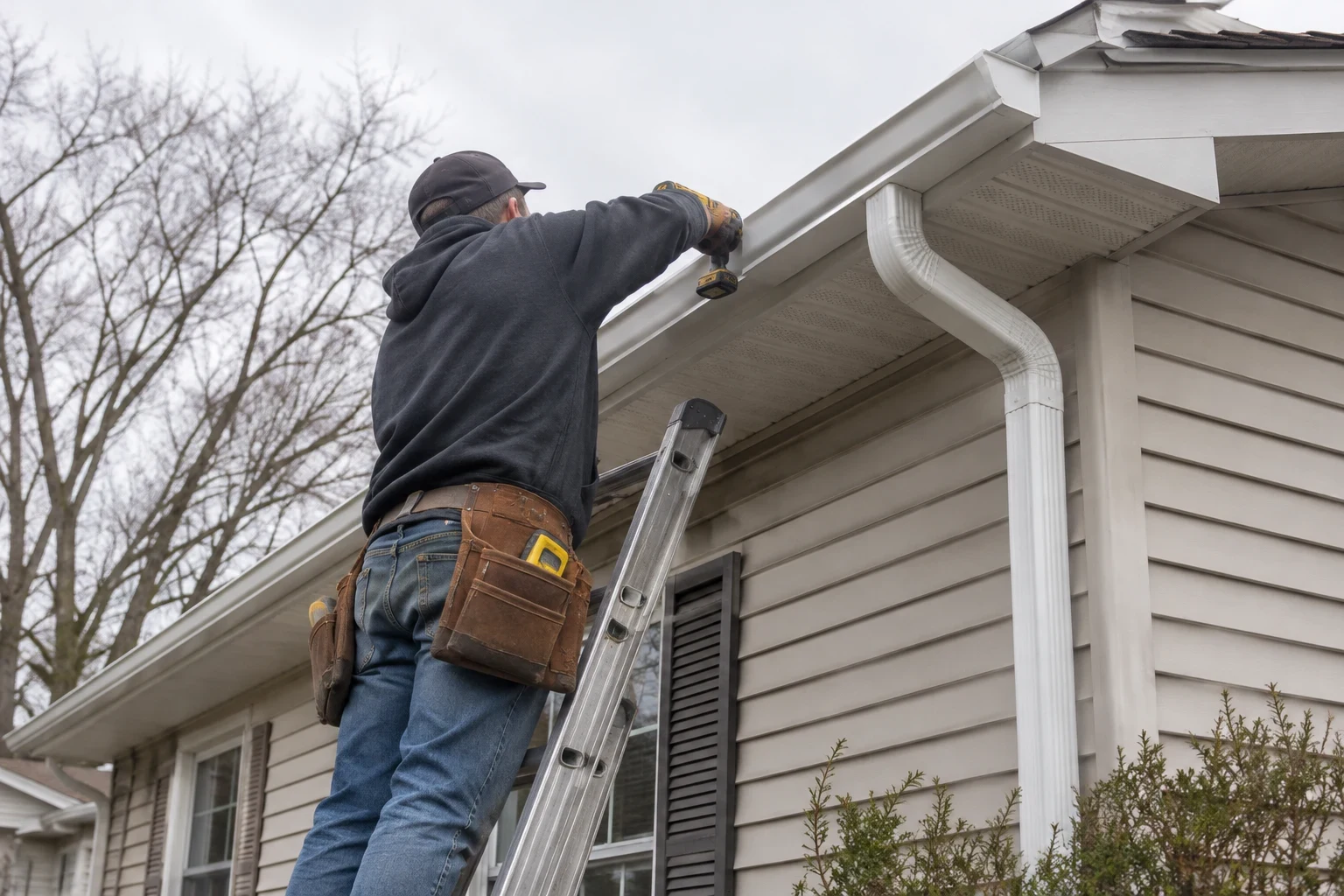
Gutter Repair and Installation in Columbus
We repair, adjust and replace gutters so rain comes off your roof and ends up well away from your foundation. You get a plain explanation of what's wrong and what it takes to fix. If a repair will do the job, we say so before anyone talks about new gutters.
What gutter work is for, and when it makes sense
Your gutters catch rain at the edge of the roof and carry it to a spot where it can't cause trouble. Once they sag, leak at a joint or overflow the front lip, that water drops right at the base of your home. It soaks the fascia board behind the gutter, carves ruts in your mulch beds and works its way into basements and crawl spaces.
Plenty of gutter problems can be fixed. A loose hanger, a corner joint whose sealant has given out or a plugged downspout is often a one-visit repair. New gutters make sense when a run has rusted through, is too small for the roof it serves, or carries so many patches that another leak is only weeks away.
Columbus winters freeze and thaw again and again, and a gutter packed with ice gets heavy. That's why we check how your gutters are fastened and sloped, not just whether they hold water right now.
What our gutter service covers
- One-piece runs cut on site
- New aluminum gutters are formed to match each roof edge from end to end, so the only seams are at corners and end caps. Every seam you skip is one less place a leak can start.
- The right size and slope
- We size the gutter to the amount of roof feeding it. Bigger or steeper sections often need a 6-inch gutter rather than the standard 5-inch. Every run gets a steady fall toward its outlet so water keeps moving instead of pooling.
- Hangers that hold
- Old spike-and-ferrule fasteners loosen with age. We install hidden hangers screwed into solid fascia at tight spacing, which keeps the gutter snug against your home when snow and ice pile on.
- Downspouts and discharge
- We make sure there are enough downspouts for the roof area and that each one runs clear. Extensions or splash blocks carry the water several feet from the foundation rather than letting it drop at the wall.
- Fixes for leaks and sags
- At a dripping joint or end cap, we scrape out the old caulk and seal it fresh. Runs that have dropped get rehung at the right pitch, and dented or split pieces are replaced.
- A look at the wood behind
- Once the gutter is off, we check the fascia. If it's soft, we show you and lay out your options, including our soffit and fascia work.
Signs your gutters need attention
Water spilling over the lip
If an ordinary rain pours over the front edge, the gutter is clogged, sloped the wrong way or undersized for the roof above it.
Drooping runs or gaps behind the gutter
A run that dips between fasteners or leans away from the house holds water at each low spot. The added weight keeps tugging at the hangers until they loosen.
Stains or peeling paint underneath
Dark streaks on the fascia or paint flaking just under the gutter usually mean water is getting behind it.
Puddles and washed-out soil
Standing water or eroded ground near the downspouts, or a damp basement wall after a heavy storm, means water is landing too close to the house.
Drips at seams and corners
Rust, cracks or a steady drip at a joint tell you the sealant has failed or the metal is thinning out.
Big icicles along the eaves
Thick ice hanging from the gutters in winter often means water is backing up and refreezing. That weight puts real strain on the hangers.
How a gutter job goes
- 1
Start with a call
Describe what you've noticed, like a corner that overflows or a downspout that drips. We'll get a few details from you and pick a time to come out.
- 2
An on-site look
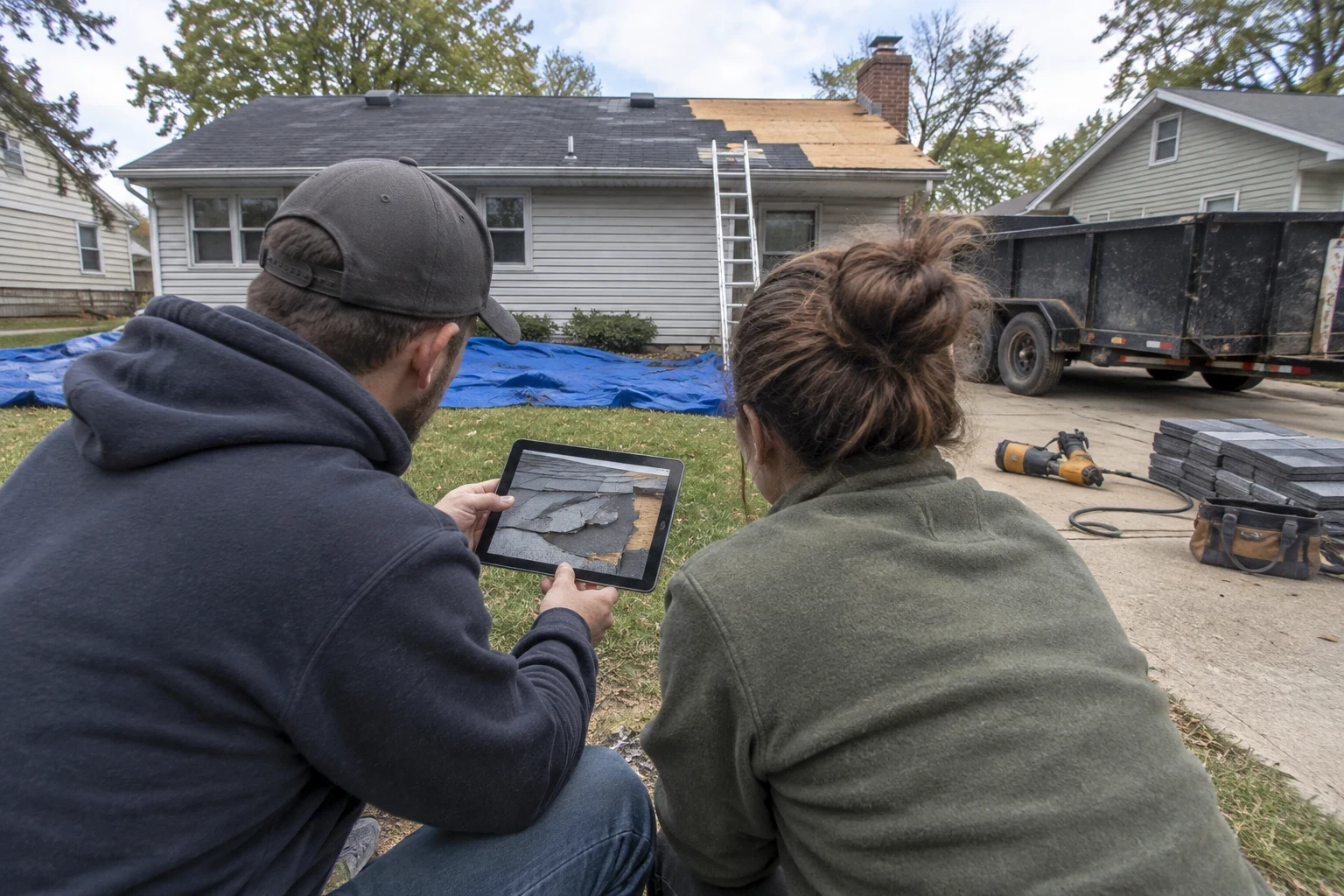
We put a level on each run, inspect every joint and downspout, and check the fascia behind the gutter. Anything worth your attention gets photographed so you can see it too.
- 3
A written estimate
Your estimate is broken out line by line and states clearly whether we suggest repair or replacement, along with the reason.
- 4
The work day
On a replacement, we remove the old gutters, check and secure the fascia, hang the new runs and attach the downspouts. Before we call it done, we run water through the system to make sure it drains where it should.
- 5
Cleanup
We haul away the old gutters and offcuts, and we comb your lawn and beds for screws and metal trimmings before leaving.
What moves the price of gutter work
Three things drive most gutter estimates: how many feet of gutter you need, how hard the roof edge is to reach and what shape the wood behind it is in. Each one shows up separately on your estimate, so nothing hides inside a single lump number. If taking the old gutter down reveals something new, we stop and talk it over with you before doing any extra work.
- Length and height
- The total linear footage sets the starting point. Second-story eaves and steep roof pitches mean more ladder setup and slower, careful work.
- Corners and downspouts
- Every inside or outside corner, outlet and downspout adds parts and labor. A house with lots of angles and roof breaks costs more than a plain rectangle.
- Fascia condition
- When the fascia is sound, the new gutter fastens right to it. Soft or rotted boards need replacing first, and that work is priced on its own line.
- Size and add-ons
- A 6-inch gutter with larger downspouts costs more than a 5-inch system. Gutter guards raise the total too, and they are always your choice.
Common questions about gutters
Something not covered here? (614) 877-6674
Is it possible to repair one section rather than the whole system?
Often a single section is the only problem. Resealing a leaking joint, rehanging a run that sags or replacing one damaged piece are routine fixes. If the rest of the system is rusting through or undersized for the roof, we'll say plainly that a patch won't hold, and you decide.
Should my gutters be 5-inch or 6-inch?
It comes down to how much roof feeds each run and how steep that roof is. Most homes do fine with 5-inch gutters. Large or steep sections, or a valley that funnels water to one point, often need 6-inch so the gutter can handle a heavy storm.
Why do my gutters overflow when they're clean?
Usually it's a run pitched the wrong direction, too few downspouts or a clog tucked inside a downspout elbow. In some cases the gutter is simply too small for the roof. We check for all four on our visit.
Do gutter guards pay off?
If large maples or oaks overhang the roof and you clean the gutters several times each year, guards can spare you a lot of ladder climbs. Where there are few trees, they rarely earn back their cost. Either way, guards still need an occasional check.
My roof is aging too. Should that affect when I replace the gutters?
It may. If you expect a new roof within a few years, replacing the gutters alongside it or just after usually makes the most sense. The drip edge needs to overlap the back of the gutter properly, and doing the two together means paying only once to remove and rehang the gutters.
Do you install gutters in the winter?
Aluminum gutters can go up in cold weather, but the sealant needs reasonably mild temperatures to set. We schedule around hard freezes and will tell you straight out if your job is better done in a warmer spell.
Find out what your gutters really need
Describe what you're seeing, from an overflowing corner to a sagging run, and we'll set a time to look at it in person. You'll hear plainly whether a repair will hold or a new system is the better call, and every number is on paper before you choose.